About Durga Puja
Durga Puja, a UNESCO-inscribed cultural heritage
- Durga Puja in Kolkata, West Bengal, India has been inscribed by UNESCO on its list of the Intangible Cultural Heritage of Humanity. Watch a short video from UNESCO.
- It is an annual festival celebrated in September or October, marking the ten-day worship of the Hindu mother-goddess Durga. It is celebrated by more than 150 million people worldwide.
- Celebrated throughout the globe, with approximately 200 celebrations in the EU, 200 in the US and Canada, and 50 in the UK.
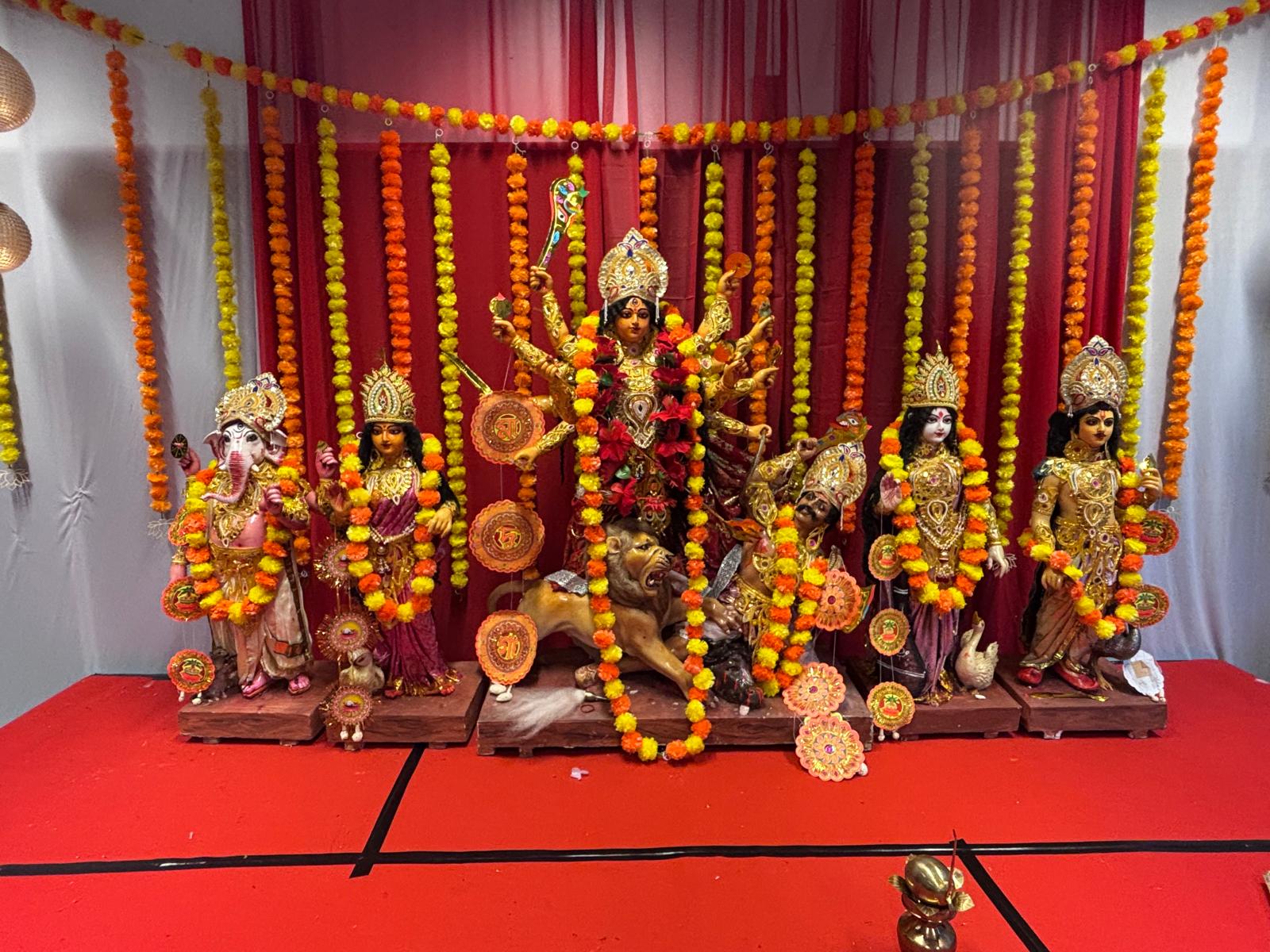
- Celebrates the victory of good (Mother Durga) over evil (Mahishasura, the buffalo demon).
- Celebrates the awakening of women’s power.
- As a ten-day celebration, Durga Puja represents the collective worship of the Hindu Goddess Durga. During this time, masterfully designed clay models of the Goddess are worshipped in “pandals” or pavilions where communities get together and celebrate.
- Several folk music, culinary, craft and performing arts traditions add to the dynamism of this celebration.
- Over the years, the Indian city of Kolkata has emerged as the geographical and cultural heart of the national and global celebrations of the festival.
Durga Puja in the Netherlands
The history of Durga Puja in the Netherlands dates back more than 20 years, when the festivals were organised in-house by a small group of Bengalis in the Benelux region.
The first public Durga Puja committee was established in 2010 in Rijswijk.
Since then, the festivities have expanded to other regions in the Netherlands, and in 2022, there were five Durga Puja celebrations across the Netherlands.
Kolorob started the first Durga Puja in Almere in 2023.
Cultural Significance
- Commonly known as Sarodotsav (The Autumn Festival), Durga Puja has been unique in a dozen ways, but most importantly in being more of a social event than a devotional or religious one.
- The addition of non-religious elements gives the festival a unique feature, with cultural events an integral part of the celebration.
- It promotes the knowledge and skills necessary for traditional artisanship and cultural practices transmitted across generations: performing arts, social practices, rituals and festive events, and knowledge and practices concerning nature and the universe.
- The festivities are marked by cities and small towns converting to public art galleries and are often described as the greatest public art show in the world.
- Tens of thousands of artists, craftspeople and workers put together this wondrous show every year:
- Idols made by craftsmen who give shape to the idols
- Extravagant light shows
- Themed pandals that house the idols